
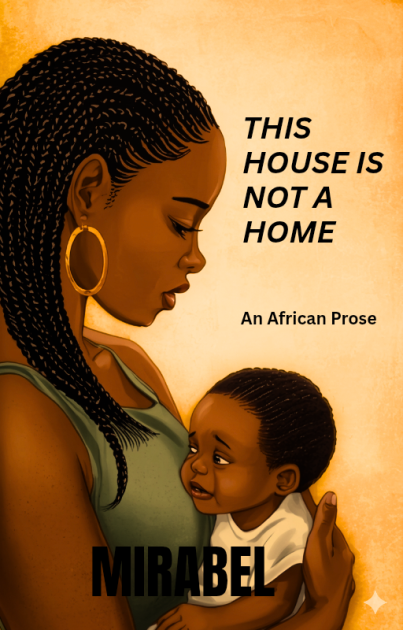
Amaka had always loved learning, though life and circumstance had denied her the full chance to pursue it. The years of marriage had only intensified the longing she carried quietly in her heart, a small flame flickering beneath the weight of expectation, control, and fear. But as she watched her daughter play in the sunlit compound, tiny fingers exploring the world, Amaka felt a renewed urgency. She wanted more than survival—she wanted knowledge, freedom, and the power to shape her own life.
The idea began as a whisper in her mind: she would return to school, sit for WAEC, and pursue higher education. It was risky, especially under Kunle’s watchful eyes. He had always believed that a woman’s place was in the home, that ambition outside the walls of the compound was dangerous, unnecessary, and a threat to his authority. But Amaka had learned that courage often grows in quiet defiance, in the small, deliberate acts that assert one’s existence.
She began planning in secret, keeping her intentions tightly folded in her heart. The first step was to secure the funds. Her fruit business, though modest, was not enough to cover tuition and examination fees. After careful thought, she decided to expand into a wrapper-selling venture, buying vibrant fabrics from Lagos in small batches and selling them to women in the neighborhood. The wrappers were not just merchandise—they were a lifeline, a way to finance the education she had been forced to put aside years ago.
Amaka’s days became a careful balance of caregiving, business, and planning. Her daughter was growing quickly, her bright eyes mirroring Amaka’s own determination. People in the neighborhood began to notice the subtle shift in her energy—the way she moved with purpose, the way her smile lingered despite Kunle’s harsh words and temper.
One morning, as she arranged her wrappers in a neat display outside the compound, a neighbor commented, “Amaka, you are looking different, more alive. What is this change?”
Amaka smiled softly, adjusting the folds of a green and gold wrapper. “I am finding myself again. Little by little, I am reclaiming the life that belongs to me.”
Inside the house, Kunle remained a storm of expectation and control. He often questioned why she spent time outside, why she took trips to Lagos Town, and why she insisted on earning for herself. But Amaka, now more cautious and strategic, kept her plans close to her chest, letting only her actions speak. She had learned that survival required patience, resilience, and the ability to act quietly when the world demanded compliance.
Her mind often wandered to the future—WAEC, JAMB, and beyond. Each thought carried a mixture of fear and hope. She imagined sitting in examination halls, filling pages with knowledge long deferred, walking onto a campus where her presence could not be questioned, and becoming a woman who existed beyond the walls of Kunle’s compound.
In these moments, as she watched her daughter laugh and play under the shade of a mango tree, Amaka understood that the stakes were higher than herself. Her choices would shape the child’s life, teaching lessons not just in obedience or survival, but in courage, resilience, and self-respect. She whispered softly, “One day, you will know that your mother chose to live, to learn, and to rise, so that you might do the same.”
Amaka’s mother, who had returned home after Omugwo, called frequently, offering advice and encouragement. “Education is a seed,” she reminded Amaka one evening over the phone. “Water it, nurture it, and it will grow. Do not let anyone’s anger or control stop you from planting it now.”
Kunle’s disapproval was a constant undercurrent. He questioned her travels, scolded her for small lapses in the house, and reminded her repeatedly that she was a wife first, a mother second, and nothing beyond that. Yet Amaka’s resolve did not waver. Each wrapper sold, each naira saved, was a brick in the foundation of a life she intended to build beyond fear and control.
By the end of the month, she had enough to register for WAEC and make arrangements to sit for supplementary courses that would prepare her for JAMB. Every moment of risk, every quiet act of defiance, strengthened the bond between her and her daughter, and deepened her understanding that knowledge was freedom—the one thing Kunle could not take from her if she claimed it with courage.
As she lay in bed at night, listening to the soft breathing of her sleeping child, Amaka felt the first real stirrings of possibility. The journey would be difficult, and Kunle’s temper and control would only grow sharper as he sensed her independence. But she had endured labor, sleepless nights, and months of quiet suffering. Education, she knew, would be her next victory—a deliberate, courageous step toward a life fully her own.
Amaka whispered into the darkness, “I will rise, not for anyone, but for me and for the daughter who watches me. The world will not dictate our limits. We will learn, we will grow, and we will exist on our own terms.”
Her heart, though cautious, was steady. The first seeds had been sown. Now she would nurture them, and let them grow into a life that no one could control.
Comments ()
Loading comments...
No comments yet
Be the first to share your thoughts!
Sign in to reply
Sign InYou'll be asked to sign in before posting — your comment is saved.