
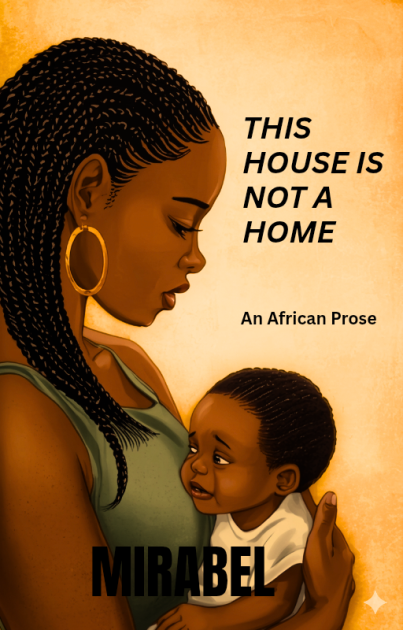
Four months had passed since Amaka had given birth. The days had settled into a rhythm of feeding, cleaning, and soothing her daughter, the little girl now alert and observant, her tiny eyes always searching, always learning. The Omugwo period with Amaka’s mother had ended, leaving her once again to navigate the compound largely under Kunle’s critical gaze. Yet in these months, Amaka’s body had regained strength, and with it, a quiet determination began to stir.
The mornings were the hardest. Kunle was often impatient, expecting the house to run smoothly despite the presence of a newborn. He scolded over the smallest things—clothes not folded the way he preferred, meals not prepared at his exact time, the child’s cries interrupting his rest. His words were sharp, but Amaka had grown used to them. She had learned to move with patience, to endure, and to keep her quiet defiance alive.
One afternoon, while rocking her daughter in the small cradle, Amaka’s thoughts turned to the market stall she had once run before pregnancy. She remembered the way the colors of mangoes, oranges, and bananas had glimmered in the sun, the sounds of vendors calling out their wares, the hum of life outside the walls of her home. She longed to reclaim that part of herself—not for Kunle, not for anyone else, but for herself and for the small sense of freedom it promised.
She approached Kunle cautiously one evening, her daughter swaddled against her chest. “Kunle,” she began, her voice steady though gentle, “I want to start selling fruits at the market again. I have rested enough, and I feel strong enough to manage. I will take care of the baby and the house as well.”
Kunle’s face darkened immediately. “You just gave birth four months ago. Are you foolish enough to risk yourself and the baby for some small stall?” His voice was sharp, cutting through the quiet room. “I did not agree to this. You will stay home. That is your place.”
Amaka’s eyes met his, unwavering. “This is not about risking myself for money. It is about reclaiming a part of my life that was denied. I want to contribute, to feel capable, to show my daughter that a woman can act with purpose and courage.”
Kunle’s jaw tightened, his frustration palpable, but Amaka did not flinch. She had endured his control for too long; she had survived pregnancy, birth, sleepless nights, and now, she would not let fear or his anger dictate her choices.
The next morning, she prepared carefully. Her daughter rested in a small bassinet beside her, and she dressed in simple, practical clothing suitable for the market. The compound felt unusually quiet as she stepped outside, the sunlight warm against her skin, the bustle of the city just beginning to stir in the distance.
At the market, she found a small shaded space among the other vendors. She arranged her fruits with care, the oranges, bananas, and mangoes catching the morning light, drawing the eyes of passersby. Each sale was a quiet victory, a proof that she could carve her own space in the world, even under Kunle’s shadow.
By mid-morning, a few neighbors stopped to greet her. Some were surprised to see her at the market so soon after childbirth; others smiled with admiration, sensing the courage it took. Amaka moved with quiet confidence, the rhythm of the market filling her with energy and a renewed sense of self.
When she returned home later that afternoon, Kunle was waiting, arms crossed, expression unreadable. She placed the baby back in the cradle, washed her hands, and faced him squarely.
“Did you survive?” he asked finally, his voice low, tinged with something unspoken.
“I did,” she said calmly. “And I will continue to survive, no matter what you think. This is my life, and my daughter’s life. I will not allow fear or control to define it.”
That night, as she lay beside her daughter, Amaka felt a quiet, unshakable satisfaction. The market was more than just a place to sell fruits—it was her first tangible step toward independence, a demonstration of courage, and a promise that she and her daughter would face the world on their own terms.
Amaka whispered softly to the sleeping child, “We are alive. We are strong. And no one will dictate the shape of our lives. Together, we will grow, and together, we will thrive.”
The compound remained silent around her, but inside Amaka, a steady flame of independence burned brighter than ever, illuminating a future she was determined to claim.
Comments ()
Loading comments...
No comments yet
Be the first to share your thoughts!
Sign in to reply
Sign InYou'll be asked to sign in before posting — your comment is saved.