

Chapter 1
The Road Back to Umoya
The road to Umoya had always been narrow, but Chinonso did not remember it feeling this long.
Red dust clung stubbornly to his sandals as he walked the last stretch into the village. The dry harmattan wind dragged across the land like a tired whisper, carrying the smell of soil and something faintly sour that he could not place.
It had been seven years since he left.
Seven years since he had sworn never to return.
Yet here he was again, walking the same road he once ran down as a boy chasing goats and laughter.
The village looked almost the same.
Mud houses stood quietly beneath tired roofs of rusted zinc. Palm trees leaned lazily against the sky. Smoke rose from cooking fires somewhere deeper inside the settlement.
But something was wrong.
Umoya had always been loud.
Children shouting. Women arguing over market prices. Radios playing music that crackled through the afternoon heat.
Now the village felt… careful.
Too quiet.
The first person Chinonso saw was an old woman sitting outside a hut, peeling cassava into a metal bowl. Her knife paused when she noticed him.
Her eyes followed him.
She did not greet him.
Another man carrying a sack of grain stopped walking when Chinonso passed. The man stared with the stiff, distant expression of someone trying not to be seen staring.
Chinonso forced a polite nod.
“Good afternoon.”
The man hesitated before replying.
“Afternoon.”
Then he walked away faster than necessary.
Chinonso frowned slightly.
Strange.
He kept moving deeper into the village. The ground here felt firmer beneath his feet, packed hard by years of footsteps. A goat bleated somewhere nearby, tied lazily to a wooden stake.
But even the animals seemed restless.
They shifted. Snorted. Pulled at their ropes.
Almost as if they could smell something beneath the earth.
A group of women stood beside a well ahead of him, their heads bent together in quiet conversation. Their voices stopped the moment Chinonso came into view.
One of them whispered something.
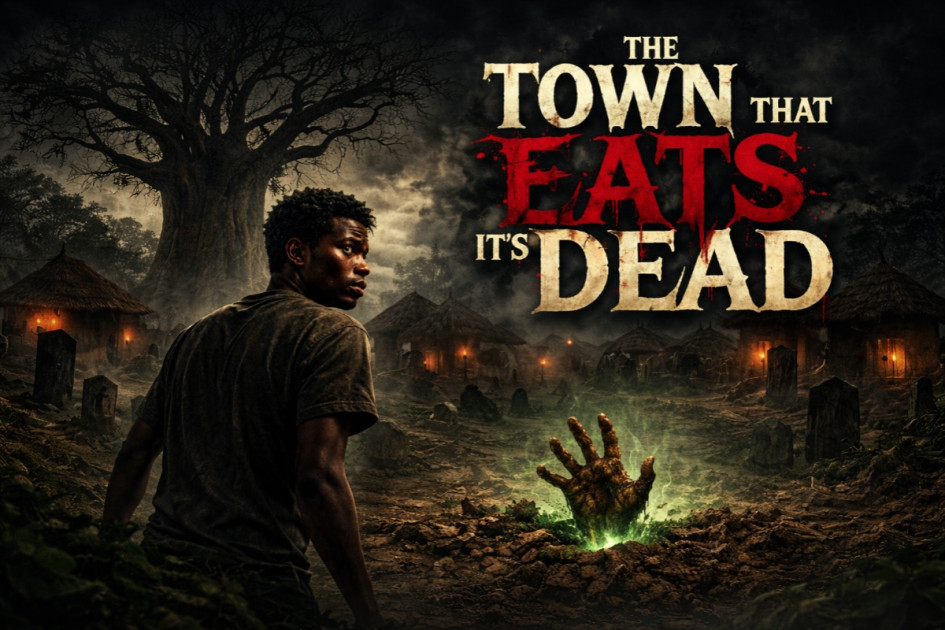
Another woman glanced toward him, then toward the distant edge of the village where the cemetery lay beyond a cluster of baobab trees.
Chinonso followed her gaze.
The cemetery.
Even from this distance, he could see the uneven rows of earth mounds rising slightly above the ground.
A chill slid slowly down his spine.
He told himself it was only grief.
After all, that was why he had returned.
His father was dead.
The message had arrived three days ago through a distant cousin who traveled to the city.
A fever took him, the letter said.
Come quickly. He must be buried.
No explanations.
No details.
Just the simple demand of death.
Chinonso’s father had been many things in life. A farmer. A stubborn man. A man who spoke more to the land than to people.
But he had never been weak.
The idea of him dying from a sudden fever felt wrong somehow.
As Chinonso approached the family compound, the air grew heavier.
The small yard was already filled with villagers.
They stood in quiet groups, speaking in low voices. Some sat on wooden stools. Others leaned against the mud walls with the tired patience of people who had been waiting for hours.
Every head turned when Chinonso entered.
He recognized some faces.
Others looked unfamiliar.
But none of them smiled.
His aunt approached first.
Her back had curved with age since the last time he saw her. Deep lines marked her face like cracks in dry soil.
“Chinonso,” she said softly.
He bowed his head slightly in greeting.
“Auntie.”
She studied him for a long moment before pulling him into a brief embrace. Her arms felt thin and brittle.
“You came quickly.”
“I came as soon as I heard.”
She nodded once.
“The burial must happen before nightfall.”
Chinonso frowned slightly.
“That soon?”
“It is better that way.”
She avoided his eyes when she said it.
Two men stepped forward and lifted the wooden coffin that rested in the shade of the compound wall. It was simple and unpainted, the kind built quickly when death arrives without warning.
Chinonso moved closer.
For a moment, he hesitated.
Then he placed his hand on the lid.
The wood felt strangely cold.
“Can I see him?” he asked quietly.
His aunt’s lips tightened.
“It is not necessary.”
“I should say goodbye.”
The villagers shifted uncomfortably.
Someone behind him muttered something too low to hear.
Chinonso looked around.
Their faces had the same uneasy expression he noticed when he first entered the village.
Reluctance.
Fear.
Why?
Finally, his aunt sighed.
“If you must.”
She nodded to the two men.
They lifted the coffin lid.
Chinonso leaned forward.
Then he froze.
The coffin was empty.
For a moment, the world seemed to tilt.
He stared into the hollow wooden box, waiting for his mind to correct the mistake.
But the coffin remained empty.
No body.
No burial cloth.
Nothing.
Just bare wood.
A quiet murmur rippled through the gathered villagers.
Chinonso slowly turned toward his aunt.
“Where is my father?”
She did not answer immediately.
Instead, her tired eyes drifted toward the distant cemetery again.
The same cemetery the women at the well had been watching.
When she finally spoke, her voice was barely louder than the wind.
“We buried him yesterday.”
Chinonso blinked in confusion.
“Then why—”
She shook her head.
“It did not hold him.”
The yard fell silent.
Even the wind seemed to pause.
Chinonso felt a knot of cold dread tighten slowly in his chest.
“What do you mean… it didn’t hold him?”
No one answered.
Some villagers lowered their eyes.
Others stared toward the ground.
At the far edge of the compound, an old man spoke at last.
His voice sounded dry and worn.
“You left this village too long ago, boy.”
He pointed toward the cemetery.
“Here in Umoya… the soil does not like to keep the dead.”
Far beyond the huts, the cemetery stood quietly beneath the baobab trees.
The earth there looked freshly disturbed.
And for a brief moment, Chinonso could have sworn the ground moved.
Just slightly.
As if something beneath it had shifted.
Comments ()
Loading comments...
No comments yet
Be the first to share your thoughts!
Sign in to reply
Sign InYou'll be asked to sign in before posting — your comment is saved.