
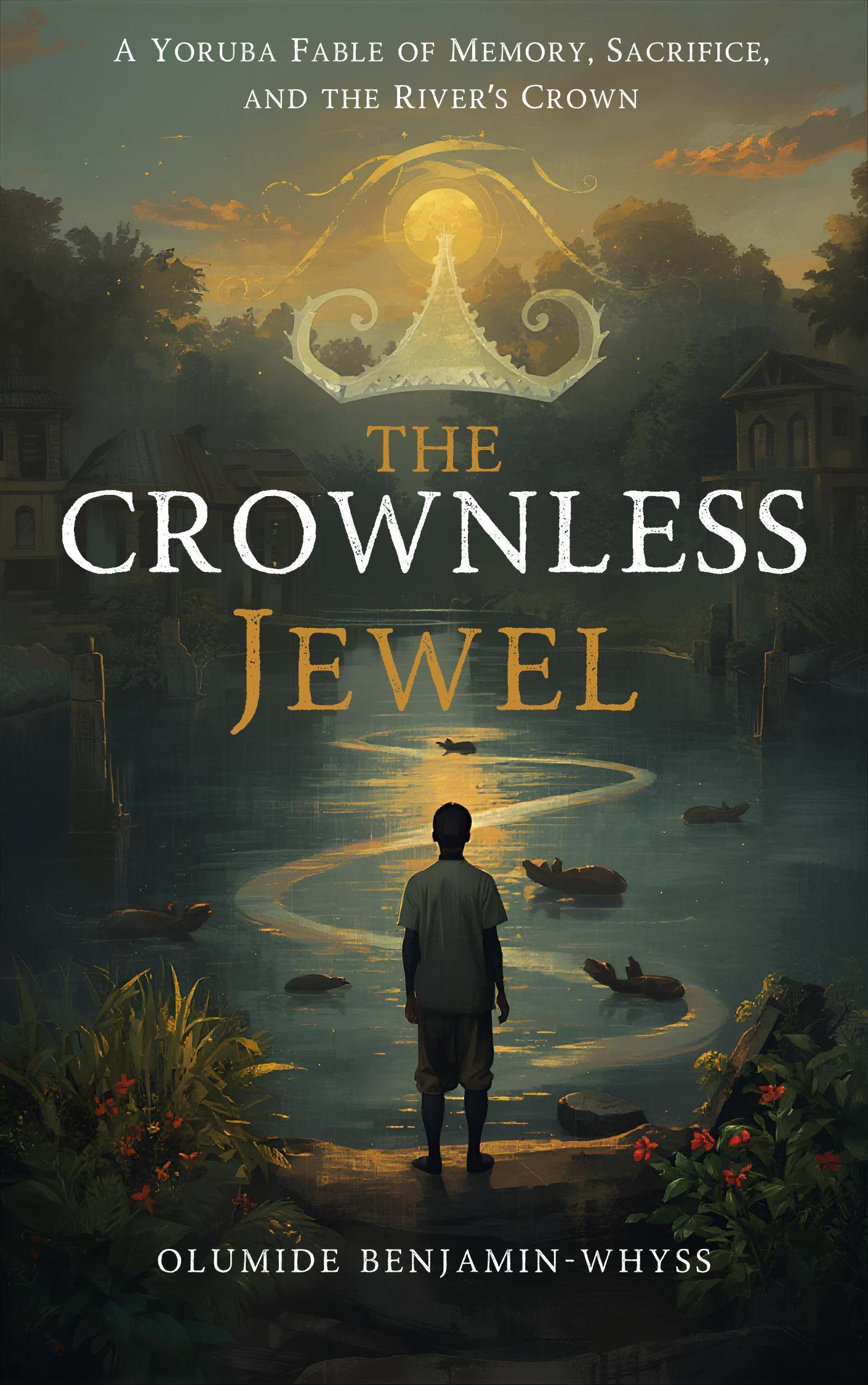
In the days when Ile-Ife still shimmered with the breath of Oduduwa, and the drums of the Oba echoed through forests thick with secrets, there lived a boy named Adegoke—son of a minor court artisan, grandson of a forgotten Ifá priest. He wasn’t meant for greatness. Not in a city where lineage opened doors like sacred calabashes, and your name had to carry the weight of ancestors to be heard at all.
Adegoke’s hands were skilled, he carved agere Ifá trays with precision no elder could fault, but his heart was restless.
“Why carve destiny for others,” he’d mutter, sanding the grooves of a divination bowl, “when I don’t know my own?”
The city had changed. Once, every household honoured Ẹbọ—offerings to the Orisha. Every farmer asked Orisha Oko for blessings before planting. Fishermen sang to Yemoja as they cast nets into the Osun River. But now? Iron pots from the north clattered louder than prayer bells. Merchants traded palm oil for foreign trinkets and forgot to pour libation. Even the sacred grove by the riverbank had trash: broken pots, discarded cloth, the sour stink of fermented palm wine left to rot.
And the river… the river wept.
Its waters, once clear as Osun’s laughter, now ran dull and sluggish. Fish floated belly-up. The sacred white crocodiles hadn’t been seen in moons.
One evening, Adegoke sat by the bank, tossing river stones. His mother’s last words echoed in his mind: “When the land forgets its covenant, only the unwilling heir can restore it.” She’d died during the last dry season; her cough worsened by the ash from uncontrolled bushfires. He never understood what she meant by “unwilling heir.”
“Still moping, Crownless?” teased a voice.
Adegoke didn’t turn. He knew that lilting tone. Ifeoma, daughter of the royal drummer, barefoot as always, her hair coiled with cowrie shells. She carried a basket of yams balanced on her head like it weighed nothing.
“I’m not moping,” he said.
“I’m… observing.”
“Observing the trash?” She dropped beside him, wrinkling her nose. “Even the frogs have moved downstream. My father says the Oba’s priests are blind. They keep chanting blessings while the river chokes.”
“They say it’s a curse,” Adegoke murmured.
“But curses don’t smell like burnt oil and rotten plantain.” Ifeoma grinned.
“Maybe it’s not a curse. Maybe it’s a test. And maybe,” she nudged him, “the gods picked the wrong champion. You’d trip over your own feet trying to perform Ẹbọ.”
“I’d do better than the court priests who sell charms to merchants who dump waste in sacred springs.” He scowled.
They both fell quiet as a sudden wind swept through the palms, unnaturally cold. The river churned, though no rain fell. From the depths, a low hum rose, like a thousand bees trapped in clay pots.
Then, a voice, neither young nor old, neither male nor female, but ancient as the first rain:
“The vow is broken. The crown is shattered. Who will remember?”
Adegoke stumbled back. Ifeoma clutched his arm, eyes wide.
“Did you—?”
Before he could answer, something glinted in the murky shallows. A flash of gold. He waded in, ignoring the slime, and pulled out a small, water-worn object: a fragment of a beaded crown, its red and white beads dull, but one coral bead still glowing faintly like a trapped ember.
The moment his fingers touched it, visions flooded him:
Warriors kneeling before a tree older than memory.
The Oba of old, placing this crown on the riverbank as a pledge: “As long as this crown rests in clean hands, we honor the pact.”
Men laughing as they threw rags into the water.
The crown shattering. The river screaming.
He gasped, dropping to his knees.
“Adegoke?” Ifeoma whispered.
“What did you see?”
He looked at the fragment, then at the dying river.
“I think… I just found the unwilling heir.”
* * *
The coral bead pulsed in Adegoke’s palm like a sleeping firefly. He wrapped it in a strip of indigo cloth his mother once used to tie her waist and tucked it into his tunic.
“We need answers,” he told Ifeoma the next morning, standing outside the crooked hut at the edge of the sacred grove, the one everyone avoided because the trees leaned inward like gossiping elders.
“That’s Baba Ologun’s place,” she said, eyes wide. “He hasn’t spoken to anyone since the last eclipse. They say he only talks to his pet tortoise.”
“Then I’ll talk to the tortoise.”
Baba Ologun was indeed seated on a raffia mat, feeding yam shavings to a tortoise the size of a cooking pot. The old Babalawo’s beard was knotted with charms, his eyes milky but sharp like river stones worn smooth but still heavy.
“Go away,” he said without looking up. “I don’t do riddles for restless boys.”
“I didn’t come for a riddle,” Adegoke said, holding out the crown fragment. “I came because the river is dying.”
The tortoise stopped chewing.
Baba Ologun’s head snapped up. He snatched the fragment, his fingers trembling. “Where did you get this?”
“The Osun River. Last night. After… a voice spoke.”
The old man closed his eyes. “Ah. She remembers.”
“Who?”
“Osun. Sweet-tongued, golden-hearted Osun. She made this crown with her own hands during the Great Pact when the Oba of Ife swore never to let greed poison the land. The crown was her anchor in this world. As long as it was whole and honoured, she would keep the rivers flowing, the fish multiplying, the herbs potent.”
“And now it’s broken,” Adegoke whispered.
“Not just broken,” Baba Ologun rasped. “Shattered into three. One piece you hold. The second lies in the Iron Forest guarded by a spirit who hates liars. The third… the third was stolen.”
“Stolen? By who?”
“By someone who believed progress meant forgetting.” The old man sighed.
“You must find all three before the next full moon. If you fail, Osun will withdraw her grace. The rivers will dry. Crops will wither. And no child born after that day will ever hear a drum call their name.” He pointed a bony finger at Adegoke.
“Why me?” Adegoke’s stomach dropped.
“Because the crown chose you,” Baba Ologun said, handing back the fragment. “And because you’re the only one who still notices the river weeping.”
As Adegoke turned to leave, the tortoise cleared its throat loudly.
“Also,” Baba Ologun added dryly, “take this fool with you.” He tossed a small gourd to Ifeoma. “It contains truth-dust. Sprinkle it when the forest spirit tries to trick you. And for Osun’s sake, don’t let her sing.”
Ifeoma clutched the gourd, offended. “I can sing!”
“No,” the tortoise said in a voice like cracking clay. “You cannot.”
Ifeoma gasped. Adegoke bit his lip to keep from laughing.
That night, they entered the Iron Forest; so named because no metal could stay sharp within its borders. The trees dripped silver moss, and the air hummed with unseen wings.
“Remember,” Ifeoma whispered, gripping her gourd, “truth-dust only works if you speak truth first.”
Adegoke nodded, then froze.
From the shadows stepped a figure with bark for skin and eyes like polished obsidian: Àjẹ́, the forest trickster, known to twist words until even the honest sounded guilty.
“Lost, little mortals?” Àjẹ́ purred, circling them. “Or did you come to steal more than you’ve already taken?”
Adegoke swallowed. His internal conflict roared: Am I worthy? Or just another boy pretending to matter?
“I came to restore what was broken,” he said.
Àjẹ́ grinned, showing teeth like thorns. “Then answer this: What is the one thing men promise the Orisha… but never give?”
Silence.
Ifeoma nudged him. “Say it.”
Adegoke took a breath. “Time.”
Àjẹ́’s grin faded.
“We promise offerings,” Adegoke continued, voice strengthening, “but we don’t give our time to remember, to listen, to care. We treat the sacred like a shop. We take blessings, leave coins, and walk away.”
The forest stilled.
Then Àjẹ́ bowed and tossed a second crown fragment from a hollow in his chest. “Well spoken, Crownless One.”
As they turned to leave, Ifeoma muttered, “I still think I can sing.”
Àjẹ́ called after her, “Try it and I’ll turn your voice into a mosquito’s whine!”
Adegoke finally laughed. Real laughter. The kind that shakes off fear.
But as they emerged from the forest, a shadow watched from the palace towers. A man in royal blue robes, clutching the third fragment… hidden inside a royal scepter.
The Oba’s own brother.
* * *
The third fragment wasn’t just missing, it was hidden in plain sight.
Adegoke learned this the next morning when Ifeoma’s father, the royal drummer, returned from the palace with grim news. “The Oba’s brother, Prince Adetola, has declared the river’s sickness a ‘natural cycle,’” he said, wiping sweat from his brow. “He says we must stop ‘wasting time on old superstitions’ and build more oil presses along the banks.”
“Oil presses?” Adegoke’s blood ran cold. Those foreign machines brought by western traders and businessmen leaked black sludge into the soil. He’d seen fish suffocate in it.
Worse: drummers never lied. If Adetola spoke against the Orisha, it meant he’d already turned his back on the covenant.
That night, under a sky heavy with unshed rain, Adegoke and Ifeoma crept toward the palace walls. Not the grand entrance guarded by men with iron-tipped spears but the old servant’s gate, choked with morning glories.
“You’re mad,” Ifeoma whispered as they slipped inside. “If they catch us, they’ll sell us to the salt traders.”
“Then don’t get caught,” Adegoke said but his hands shook.
The palace was a maze of courtyards and whispering corridors, lit by oil lamps shaped like river serpents. They followed the sound of clinking metal to the royal workshop, where Prince Adetola often met with foreign merchants.
Peering through a carved lattice screen, they saw him.
Adetola stood before a low table, the third crown fragment glinting in his palm not dull like the others, but pulsing with unnatural light. Around him, men in bright kaftans counted cowries and unrolled maps marked with X’s over sacred springs.
“This land is ours to shape,” Adetola said, voice smooth as palm wine. “The Orisha are stories for children. Real power lies in trade, in iron, in profit.”
“Then why keep the fragment?” asked a merchant.
Adetola smirked. “Because even lies need relics. I tell the people I ‘protect’ it in the royal vault while I leech the river dry for their machines. Let them worship a lie. It keeps them quiet.”
Adegoke’s stomach twisted. This wasn’t just greed it was sacrilege wrapped in silk.
“We need that piece,” Ifeoma hissed. “But how?”
Before Adegoke could answer, a floorboard creaked.
They froze.
Adetola’s head snapped toward the screen. “Who’s there?”
Adegoke’s mind raced. Lie? Fight? Flee?
Then remembering Baba Ologun’s warning he chose the truth.
He stepped forward, pulling back the screen. “It’s me, Adegoke. Son of Olaide, carver of Ifá trays.”
Adetola’s eyes narrowed. “The artisan’s boy? What do you want?”
“I want to know why you broke the vow.”
A silence thick as palm oil settled over the room. The merchants backed away.
Adetola laughed, a sharp, brittle sound. “Because promises don’t feed villages. Iron does. Oil does. The world is changing, boy. The Orisha won’t stop droughts or foreign armies. But I can.”
“You’re poisoning the land,” Adegoke said, voice trembling but clear. “Osun is weeping. The fish are gone. My mother died breathing ash from your fires.”
For a heartbeat, something flickered in Adetola’s eyes—regret? Shame?
Then it vanished. “Sentiment,” he spat. “That’s what weakens us. I did what the Oba was too afraid to do: I chose progress over ghosts.”
He strode forward, holding out the fragment like a taunt. “Take it, if you dare. But know this: the river is already dead. No crown can bring it back.”
Adegoke reached for it and Adetola snapped it shut in a bronze lockbox shaped like a crocodile. “Not so fast. If you want it, prove the Orisha still care. Bring me a live white crocodile from the Osun River by dawn. If you can’t… the fragment stays with me. And your ‘covenant’ dies with the river.”
He turned away. “Guards!”
They barely escaped, scrambling over the wall as shouts echoed behind them.
Back by the dying river, Adegoke sank to his knees. “He’s right,” he whispered. “There are no white crocodiles left.”
But Ifeoma knelt beside him, eyes blazing. “Then we make one appear.”
“How?”
“By doing what no one’s done in years,” she said. “We perform Ẹbọ—real Ẹbọ. Not empty gestures. We give something that costs us.”
Adegoke looked at his hands, his only gift. His carvings. His future.
He unslung the small leather pouch at his hip: his finest agere Ifá, the one he’d hoped to present to the Oba’s court to earn his place.
Without a word, he walked to the river’s edge, knelt, and placed it in the water. “For Osun,” he said. “Take my ambition, if it means healing your home.”
Ifeoma poured out her gourd of truth-dust not as a weapon, but as an offering. “For clarity,” she said.
Then they waited.
Minutes passed. The wind stilled. Even the crickets fell silent.
Just as despair began to creep back in a ripple.
Then another.
Then, from the murkiest part of the river, a shape emerged: sleek, ancient, its scales shimmering not with white, but with gold.
The sacred crocodile, Ẹja Osun, lifted its head and fixed Adegoke with eyes that held centuries of memory.
It opened its mouth.
Not to bite.
But to speak.
“You gave without expecting a return. That is the first truth.”
Then, with a flick of its tail, it dropped something at Adegoke’s feet: a key woven from river reeds and coral.
“The lockbox,” Ifeoma breathed.
But Adegoke wasn’t looking at the key.
He was staring at the crocodile, who now began to fade into mist, its voice echoing one last time:
“The third fragment is not the hardest to retrieve… but the hardest to forgive.”
Adegoke understood.
It wasn’t just about stealing back a piece of crown.
It was about facing the man who’d broken the world and offering him a chance to remember.
Even if he didn’t deserve it.
* * *
Dawn came pale and hesitant, like a child peeking through a doorway. Adegoke and Ifeoma stood once more at the palace gate, but this time, they didn’t sneak.
They walked in openly, robes dusted with river clay, the coral-gold key dangling from Adegoke’s wrist like a bracelet of fate.
The guards barred their path until Adegoke raised his voice, clear and steady:
“I come not to steal, but to fulfill a challenge set by Prince Adetola himself. Let him witness what he claimed impossible.”
Word reached the prince fast. Within minutes, he stood on the balcony overlooking the courtyard, arms crossed, face unreadable.
Below, on a stone platter, sat the white crocodile still shimmering, still breathing.
A murmur rippled through the gathered courtiers. Some crossed themselves. Others wept.
Adetola descended slowly, his royal blue agbada whispering against the stairs. He knelt, touched the crocodile’s snout and jerked his hand back as if burned.
“It’s real,” he whispered.
“The river still remembers you,” Adegoke said. “Even if you’ve forgotten it.”
Adetola’s jaw tightened. He unlocked the crocodile-shaped box with shaking hands and removed the third fragment. For a long moment, he just stared at it, then at Adegoke.
“You win,” he said flatly. “Take it.”
But Adegoke didn’t reach for it.
Instead, he bowed deeply not to the prince, but to the fragment itself. “This piece belongs to Osun. Not to you. Not to me. To the covenant.”
Then he did something no one expected.
He knelt and placed his own fragment on the ground between them.
“Join us,” he said softly. “Not as a prince. Not as a merchant. But as a son of Ife.”
Silence.
Adetola laughed, a hollow sound.
“You think I’ll crawl back to shrines and chants after seeing what iron can build?”
“I think,” Adegoke said, meeting his eyes, “you stopped believing because you were afraid.”
“Of what?”
“That you weren’t enough. That progress meant abandoning your ancestors. But legacy isn’t a cage; it’s a root. You can grow new branches from it.”
Adetola looked away. But his fingers curled around the fragment like it was a lifeline.
From the edge of the courtyard, Ifeoma cleared her throat, then, before anyone could stop her, began to sing.
Not loudly. Not perfectly. But clearly, a Yoruba lullaby her grandmother used to hum while weaving cloth by the riverbank. The same tune Osun was said to sing when cradling newborns in her golden waters.
Halfway through the second verse, her voice cracked.
The crocodile sighed.
Adetola actually snorted then caught himself.
But then… he began to hum along.
Low at first. Off-key. But present.
And in that imperfect harmony—artisan’s son, prince, drummer’s daughter, and sacred beast—something shifted in the air. The sky lightened. A breeze carried the scent of blooming odundun flowers.
The three crown fragments, lying side by side on the stone, began to glow.
Not with fire, but with memory.
Visions bloomed in the courtyard, visible to all:
The first Oba planting a kola nut beneath the Iroko tree.
Fishermen returning half their catch to the river as thanks.
Children learning proverbs under moonlight.
Balance.
Adetola fell to his knees, tears cutting tracks through the dust on his cheeks. “I thought… I was saving us,” he choked out. “But I was erasing us.”
Adegoke placed a hand on his shoulder. “It’s not too late to remember.”
With trembling hands, the prince placed his fragment beside the others.
The moment they touched, a pulse of gold light shot into the sky, bright enough to be seen from the Osun River.
Back at Baba Ologun’s hut, the tortoise stood on its hind legs and clapped its flippers.
That evening, the full moon rose heavy and silver over Ile-Ife.
Adegoke, Ifeoma, Adetola, and the old Babalawo gathered at the riverbank. The crocodile waited in the shallows, its golden eyes watchful.
Using clay from the riverbed and threads blessed by Ifá priests, they reforged the crown not with gold or coral, but with intent. Each pressed their forehead to the fragments as they joined them, whispering promises:
“I will listen.”
“I will replenish.”
“I will teach the young to honor what came before.”
As the final bead settled into place, the river surged not violently, but joyfully. Clear water gushed from hidden springs. Fish leapt. Birds returned.
And from the center of the current, a figure rose, tall, radiant, draped in gold and amber, her hair flowing like liquid sunlight.
Osun.
She held out her hand. The crown floated to her, whole once more.
“You did not restore an object,” she said, her voice like honey over river stones.
“You restored relationship.”
She turned to Adegoke. “You doubted your place, child. But the crownless are often the ones who see the cracks in the world and dare to mend them.”
Then, with a smile, she placed the crown not on her own head, but on Adegoke’s.
It fit perfectly.
Not because he was royal.
But because he chose to care and dare.
As she faded back into the river, the crown dissolved into light spreading over the land like dew.
The covenant was renewed.
But Adegoke knew: it wouldn’t last unless people lived it, day after day. He looked at Ifeoma, who grinned and mouthed: “Told you I could sing.”
He laughed and for the first time, it didn’t feel like hiding. It felt like home.
* * *
One moon later, the Osun River ran clear as morning dew.
Children skipped barefoot along its banks, dropping kola nuts into the water not as ritual mimicry, but as gratitude. Fishermen returned the smallest catch to the currents. Even the oil presses had been reworked; Adetola’s new design used woven reeds and clay filters, so not a drop of poison touched the soil.
And at the heart of it all sat Adegoke no longer “the crownless son,” but Adegoke the Listener, as the elders now called him.
He sat beneath the great Iroko tree near the river’s bend, surrounded by a circle of wide-eyed children. In his hands, he carved not just agere Ifá trays, but small clay beads each one inscribed with a Yoruba proverb:
“Ìwà rere kì í sun wọ̀n”— Good character never sleeps.
“Ọmọ lati ile miiran jẹ ọmọ wa”— A child from another home is still our child.
“Why do we make these?” asked a girl with braids coiled like snail shells.
“Because memory is fragile,” Adegoke said, handing her a bead. “But when we shape it with our hands, it lives longer than we do.”
Nearby, Ifeoma taught a group of boys to drum not just rhythms for festivals, but the old calls that once summoned rain or calmed storms. Her voice rose in song, still off-key… but now, no one minded. Even the palm trees seemed to sway in rhythm.
At the edge of the grove, Prince Adetola supervised the rebuilding of the sacred shrine, this time with walls of living vines and a roof of woven raffia. He no longer wore royal blue, but the deep indigo of a craftsman. When a young apprentice dropped a clay pot, Adetola didn’t scold. He knelt and helped reshape it.
“Mistakes are where wisdom enters,” he said echoing words Adegoke once spoke to him.
The mystery had been solved: the land wasn’t cursed. It was grieving. And grief, like rivers, only flows when it’s witnessed.
That evening, as the sun bled gold over the hills of Ile-Ife, Adegoke walked alone to the riverbank, the place where it all began.
He didn’t bring offerings. He brought silence.
And in that silence, the water shimmered.
Not with visions this time, but with presence.
Osun didn’t appear in full glory. Instead, her essence moved through the ripples, the breeze, the cry of a fish eagle overhead. A single white crocodile surfaced, bowed its head, and vanished.
Adegoke smiled.
He finally understood: the crown was never meant to be worn. It was meant to be remembered in clean hands, in honest words, in choices made when no one is watching.
As twilight deepened, drums echoed from the palace courtyard not for war, not for ceremony, but for joy. The kind of joy that comes after sorrow has been named and held.
Adegoke turned toward the sound.
And there, waiting under the arch of the palace gate, stood Baba Ologun leaning on a staff, his tortoise ambling beside him like a tiny armored philosopher.
“You didn’t need the crown,” the old Babalawo said, eyes twinkling.
“You became the crown.”
Adegoke walked toward him, past fields where farmers sang to Orisha Oko as they planted, past market stalls where merchants poured libation before opening shop, past elders telling moonlight tales to grandchildren who listened like their lives depended on it.
Because in a way, they did.
Comments ()
Loading comments...
No comments yet
Be the first to share your thoughts!
Sign in to reply
Sign InYou'll be asked to sign in before posting — your comment is saved.